An overview of MMDC’s IT specializations, including the newly launched AI track, designed to help you navigate your next career move in a changing digital landscape.
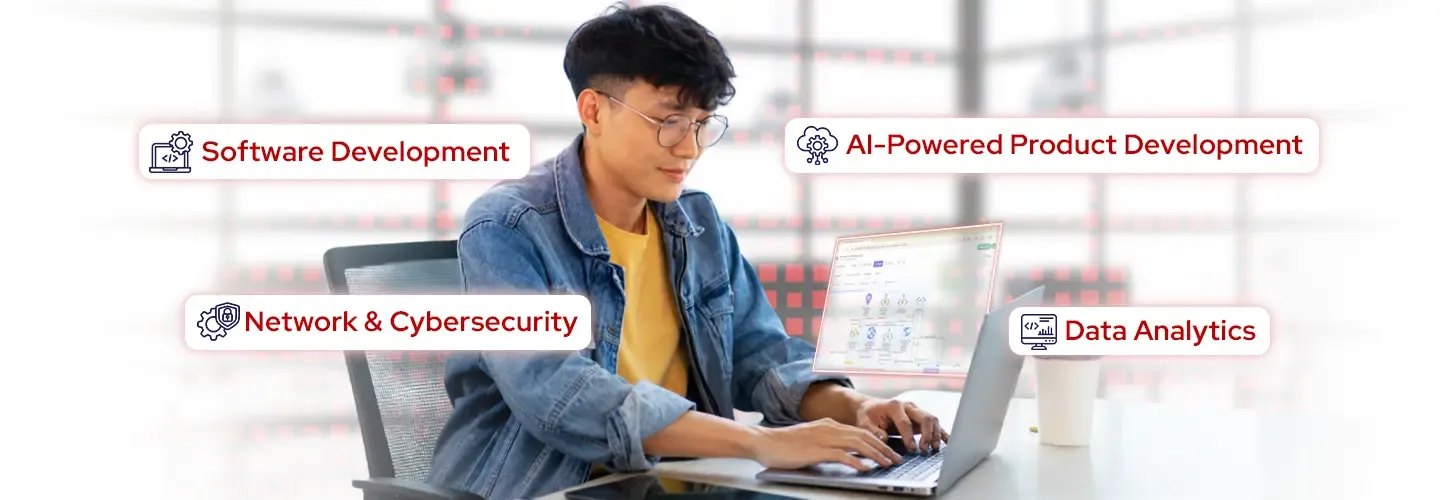
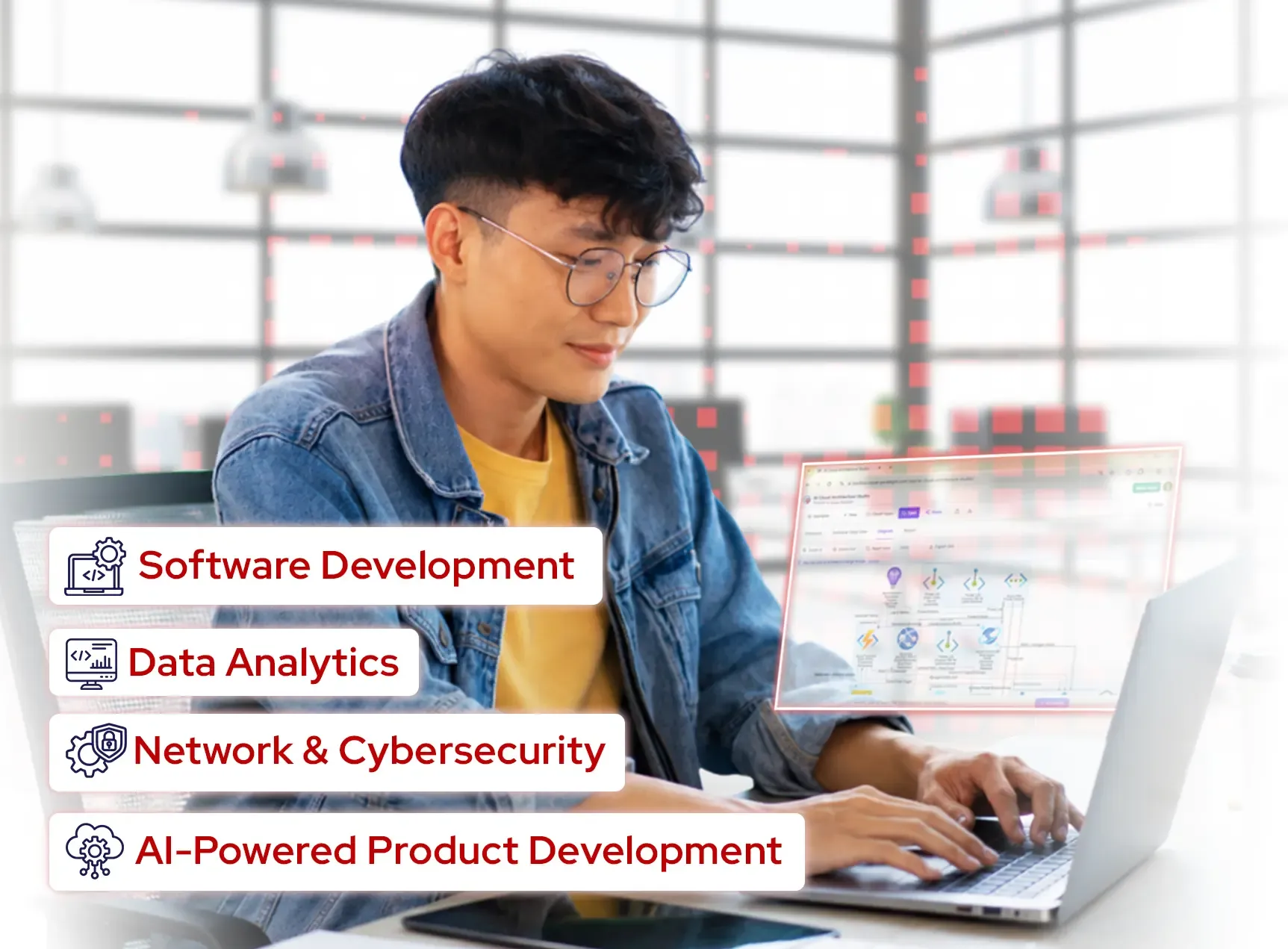
The Philippine IT industry is one of the fastest-growing sectors in the country, with the IT-BPM industry alone generating $40 billion in revenue and employing 1.9 million Filipinos in 2025. But the nature of work driving this growth is shifting fast, with companies moving away from hiring generalists, and instead on professionals with focused expertise in software development, cybersecurity, analytics, and AI. As digital transformation changes how businesses make decisions, the real opportunity for Filipino IT professionals lies in meeting these specialized demands.
MMDC's BS Information Technology (BSIT) program offers four specializations built for where the industry is heading, designed around industry practices and qualifications that employers prioritize in today's market. Through its collaboration with Arizona State University, students also gain global learning exposure that gives them a competitive edge in the international job market.
Here is a closer look at what you can expect from each path and how they fit your career goals.
Software Development: For the builders and creators
Every time you order food on an app, transfer money through GCash, or scroll through a social feed, someone built the system behind it. Software developers are the professionals who design, build, and maintain those systems, and almost every organization in the country now depends on them.
What you’ll study: This software development course covers programming languages like Java, Python, and JavaScript, along with software design, testing, and deployment. You'll also work on collaborative projects and case studies that reflect how real development teams operate.
Where it leads: Roles as a software developer, web developer, systems analyst, or QA engineer. Filipino developers are increasingly hired by companies based in the US, Australia, and Singapore, with remote work now standard across the global tech industry.
What to expect: This path suits people who enjoy building practical solutions and bringing ideas to life through technology. Since tools and frameworks evolve quickly, it also rewards curiosity and continuous learning. If you want to create systems and apps people use every day, this specialization offers strong long-term career opportunities.
For career paths, salary outlook, and course details, explore the BSIT in Software Development specialization.
Network & Cybersecurity: For the architects and defenders
Before you can protect a network, you need to know how to build one. The professionals who keep banks online, BPO offices connected, and government services running are the same people who defend those systems when something goes wrong. According to Fortinet's 2025 Global Cybersecurity Skills Gap Report, the Philippines is projected to face a shortage of 8,000 cybersecurity professionals in 2026, and that gap starts with people who understand both the architecture and defense of a network.
What you'll study: This network & cybersecurity teaches how networks are designed, configured, and maintained, covering routing, switching, and network architecture, alongside how to defend them through threat detection, vulnerability assessment, and incident response. This also prepares you for widely-recognized industry certifications like the Cisco Certified Network Associate (CCNA).
Where it leads: Roles in network engineering, cybersecurity analysis, network operations, and incident response. There is a strong demand across banks, BPOs, telecoms, and government agencies, all of which depend on reliable networks and the professionals who can build and protect them.
What to expect: This specialization is ideal for people who are analytical, detail-oriented, and dependable under pressure. The work focuses on building secure systems and protecting organizations from risks. If you want a career that keeps businesses connected and secure, this path offers strong demand and stability.
For career paths, salary outlook, and course details, explore the BSIT in Network and Cybersecurity specialization.
Data Analytics: For the pattern-spotters and decision-makers
Almost every business generates data. But they only become valuable when used to make better decisions. Data analysts turn raw information into valuable insights, helping organizations understand why a specific campaign worked, or identifying patterns in customer behavior that can drive growth. Today, the demand for these skills go beyond large corporations. Small and medium enterprises (SMEs), startups, and government agencies are also on the lookout for professionals who can make sense of their data.
What you'll study: This data analytics course talks about data cleaning, analysis, and visualization, along with machine learning and the tools behind modern reports and dashboards. The role also focuses on honing your communication skills, requiring you to bridge the gap between technical data and clear storytelling for your team.
Where it leads: Roles as a data analyst, business intelligence analyst, or insights manager, which now exists across every industry in the Philippines, including retail, finance, healthcare, and logistics.
What to expect: This path is suited for people who enjoy solving problems, spotting patterns, and turning information into useful insights. It combines analytical thinking with communication and storytelling. If you enjoy helping businesses make smarter decisions, this specialization can prepare you for opportunities across different industries.
For career paths, salary outlook, and course details, explore the BSIT in Data Analytics specialization.
AI-Powered Product Development: For the innovators and forward-thinkers
From automating customer service to predicting market trends, AI is now a core part of how modern Philippine businesses operate. While 92 percent of local organizations use these tools, the Philippine AI Report 2025 shows that 65 percent are still in the pilot stage. This allows professionals to innovate by becoming the experts who take AI projects from simple experiments to fully deployed products.
What you’ll study: Prompt engineering, AI model integration, autonomous agent development, and end-to-end product deployment. You will also cover AI ethics and responsible implementation to ensure you can lead responsibly as a forward thinker in the industry.
Where it leads: Roles in AI product development, machine learning engineering, and applied AI solutions. Since expertise in this field is still rare, companies in the Philippines and overseas are actively searching for innovators who can move their digital projects into production.
What to expect: This specialization is designed for forward-thinkers who want to build innovative digital solutions using AI. It rewards curiosity, experimentation, and continuous learning as technology evolves. If you want to work at the forefront of emerging tech, this path prepares you to help shape the future of the industry.
For career paths and course details, explore the BSIT in AI-Powered Product Development specialization.
.webp)
Where Your Tech Career Goes Next
The Philippine tech industry is growing and changing rapidly, and companies are no longer simply looking for general IT graduates. They are building specialized teams of software developers, cybersecurity professionals, data analysts, and AI innovators who can help businesses adapt, grow, and compete in a digital-first world. Choosing the right path means finding a specialization that matches not only industry demand, but also the way you think, solve problems, and want to build your future.
Mapúa Malayan Digital College's fully online BS Information Technology program is designed to fit around your work, your responsibilities, and the pace of your life. It is a Mapúan education anchored in excellence and innovation, made accessible and affordable for today's Filipino working students.
Visit the MMDC College Programs page to find the specialization that fits where you are headed. Follow MMDC on Facebook, LinkedIn, Instagram, and YouTube to learn more.